User blogs

wild cats, regularly called felids or tom cats, are various groups of predatory
mammals globally. They're distinguished by their quickness, sharp, retractable
claws, and sturdy senses, which enable them to be professional hunters. Wild
cats range in length and shape from small species, like the African wildcat and
the rusty-spotted cat, to giant carnivores like lions and tigers. These
first-rate creatures have tailored to their environments in numerous ways,
including specialized teeth for tearing meat, sturdy muscular tissues for
pouncing and chasing prey, and top-notch nighttime vision for nocturnal
searching.
While
they proportion some traits, each wild cat species has distinct traits,
behaviors, and habitats that constitute their evolutionary range.
Unfortunately, habitat degradation, searching, and human-natural world conflict
threaten many wild cat species, causing population decreases and endangerment.
Conservation activities are essential to shield these astonishing animals and
ensure their survival for generations to recognize and admire.
Exceptional
Breeds of untamed Cats:
Caracals
are a diffusion of wild cats.
Caracals
are wild cats observed in Africa, India, and vital Asia. They're medium-sized
cats with specific traits. They have a fantastic look with long legs, quick
faces, and long curled ears. Additionally, their tooth resembles dogs,
isolating them from the enormous range of wild cat species. Due to their
development, caracals are recognized as an essential addition to the list of
distinct types of feral cats.
Caracals
have specific bodily traits. Their backs are blanketed with fur that is
typically reddish-tan or sand-colored. They may have red stains on their body
sometimes. Caracals are around 40 cm long from shoulder to shoulder and weigh
between 8 and 18 kg. Substantially, the caracal species has well-known sexual
dimorphism, with males being more prominent and more enforcing than women in
most behavioral characteristics.
The
caracal has particular facial tendencies that make it easily identifiable. The
lifestyles of four to five cm-lengthy darkish hairs at the ears, two darkish
stripes stretching from the temple to the nose, a dark definition around the
mouth, excellent darkish facial capabilities, and white patches across the eyes
and mouth are among those characteristics. The caracal's eyes appear relatively
closed, most probable because of a reduced top eyelid, which may be an
adaptation to defend the eyes from the sun's glare.
The ear
hairs of the caracal may start to fall for a long time. The caracal's coat is
always ruddy tan or sandy, though black caracals are also regarded to appear.
Clouded
leopard
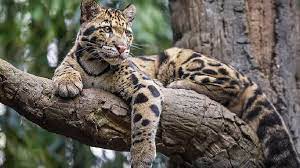
The
central place, the clouded leopard, is a wild feline discovered in deep woods
from the Himalayan foothills to principal Southeast Asia and South China. A
clouded leopard was smuggled from China to London in the early nineteenth
century and first documented in 1821. The clouded leopard has considerable
black blotches, elaborate markings, and stripes that seem like mist. It's head
and body lengths vary from 68.6 to 108 cm, with a tail period of 61 to
ninety-one cm. The clouded leopard's tail is a crucial stability software while
traversing through timber, permitting it to descend vertical tree trunks
headfirst. For the day, it rests most of the wood, but at night time, it hunts
on the forest floor.
The
clouded leopard, originating between 9.32 and four. Forty-seven million years
ago, holds the difference of being the earliest feline species to diverge from
the not-unusual ancestor of pantherine cats. Sadly, the clouded leopard is now not
present in Singapore, Taiwan, Hainan Island, and Vietnam, signifying its
extinction in the ones areas. This species' entire population is predicted to
be much less than 10,000 grownup people, with a falling population trend. There
are not any more than 1,000 adults in any unmarried populace.
Eurasian
lynx

The
Eurasian lynx is a wild cat species determined in northern the United States,
eastern Europe, and the Himalayas and Tibet hilly regions. While they could
live in numerous settings, they are typically discovered in woodlands and
prefer excessive elevations of around 1800 toes. The Eurasian lynx is a
medium-sized species that can be located internationally, cementing its
function as one of the many unique sorts of wild cats. The Eurasian lynx encounters
numerous threats, including habitat loss and fragmentation, poaching, and the
diminishing numbers of its prey species. This species has a completely brief,
reddish, or brown coat with various black dots in both number and layout.
The
Eurasian lynx's underparts, neck, and chin are faded in color. The fur of these
living at the southern stop of its range has extra vibrant shades and more
excellent spots. The coat thickens and tiers from silver-black to greyish-brown
through the wintry weather.
The
rich brown stripes at the Eurasian lynx's forehead and lower back provide its
exclusive look. It has robust, extended legs, a massive webbed, and furred paws
that function like snowshoes. A short, "bobbed" tail with a black
tip, tufts of black fur on its ears, and a protracted gray-and-white ruff
complete the lynx's appearance. These characteristics permit the Eurasian lynx
to live to tell the tale in rough terrain, where there are lots of shelters and
possibilities for prey tracking.
Cheetah

The
cheetah, one of several feral cats, has astonishing social patterns in the
wild. They are classified into three businesses: ladies with offspring, male
alliances, and lonely men. Ladies have a nomadic existence, scouring extensive
domestic grounds for prey. Conversely, adult males generally tend to preserve
extra vital territories, usually in locations rich in game, and to get
admission to girls.
The
cheetah is maximum active during the day, with top interest between sunrise and
sundown. More often than not, it preys on small to medium-sized animals
weighing less than 40 kg (88 lb). The cheetah is a well-known choice for
medium-sized ungulates, including impalas, springboks, and Thomson's gazelles.
These looking behaviors and dietary choices contribute to the cheetah's reputation
as an exceptional contribution to the large array of untamed cat species.
The
cheetah tracks its prey at near variety, frequently inside 60-70 m (2
hundred-230 ft), earlier than charging at it. At some point during the chase,
it trips its prey and rushes for the throat, proceeding to suffocate it
speedily. The cheetah breeds all year; after an envisioned three-month
incubation duration, a litter of three or four doggies is born.
Cheetah
cubs are noticeably susceptible to large animals like hyenas and lions. They're
weaned at about 4 months of age and turn out to be self-sufficient around 20
months of age. Cheetahs, unlike different carnivores like leopards and lions,
are primarily active throughout the day, emphasizing their diurnal nature.
Snow
leopard

The
snow leopard, typically referred to as the "Mountain Ghost," has
evolved to flourish in a number of the sector's harshest habitats. Their thick
white or grey coat offers insulation and safety towards brutal cold. The coat
is decorated with precise black patches, giving it a hanging look. Their
enigmatic presence and remarkable adaptability gave them the moniker
"Mountain Ghost." With their distinct developments, snow leopards are
a noteworthy addition to the huge variety of wild cat species.
The
snow leopard has extremely effective hind legs that permit it to jump longer
than its body duration. These legs provide brilliant jumping potential,
allowing them to pass fast through their icy alpine surroundings. Additionally,
their large tail aids in their adaption to snowy situations. The tail acts as a
balancing mechanism, assisting with balance over risky terrains like
snow-blanketed slopes and mountainous landscapes. The snow leopard's powerful
hind legs and long tail offer it all the equipment it desires to thrive in its
harsh environment.
Snow
leopards are famous residents of snowy mountain areas. They can be located in
12 countries, such as Nepal, India, Pakistan, Russia, etc. These secretive
species occupy a big range protecting 7,000 kilometers, accounting for
approximately 60% of their habitat, with the general public concentrated in
China. However, it is critical to be aware that around 70% of this region
remains completely unexplored and unknown, including the thriller surrounding
the snow leopards' international.
Snow
leopards can also be located in Nepal and Mongolia, similarly to China. Snow
leopards occupy approximately 15.4 square miles of habitat in Nepal, whereas
the land in Mongolia is about 193 rectangular miles. Snow leopard populations
range consistent with prey availability, surrounding surroundings, and habitat
situations. But, the overall population of snow leopards is declining, which is
alarming. The fur of those majestic beasts ranges from faded to darkish, with
black markings on the pinnacle and neck. Their backs, flanks, and shaggy tails
have more giant rosettes, contributing to their extraordinary look.
Cougar

The
cougar, now and again known as the puma, is discovered in most cases in North
the USA. But, in contrast to other large cats, the cougar cannot roar. Cougars
have a swish frame with a brief head and pointed ears that quite resemble home
cats. Their extraordinary physical features and sundry behaviors make them a
perfect addition to the various wild cat species.
Cougars
range in size from 5 to nine feet from head to tail. Male cougars weigh around
68 kg, while female cougars weigh about 45 kg. Their higher frame is covered in
commonly grey fur with a reddish tint. Their underparts, on the other hand, are
lighter in color.
The
cougar, technically called Puma concolor, is an American native wild cat
species. It has various degrees from Canada to South the US's southern Andes.
Because of its vast distribution, the cougar is known by way of multiple names,
together with puma, crimson lion, mountain lion, panther, painter, mountain
screamer, and catamount.